"Not Even a Line": A Son's Fifty-Year Search for Tadesse Gemeda | Missing From Ethiopia
Family Story6 min read
"Not Even a Line": A Son's Fifty-Year Search for His Father
Tadesse Gemeda left Dime, Ethiopia in 1974 with a British research team, before his son was born. Fifty years later, his son is still searching. This is his story.
Missing From Ethiopia
4 August 2026
Tarekegn (Dawit) Tadesse Gemeda has told his story many times, to archives, to universities, to anyone who might listen. He was born in Dime, South West Ethiopia, in 1974. His father left before he was born. He has been searching for him his whole life. This is his story, told largely in his own words.
The father he never met
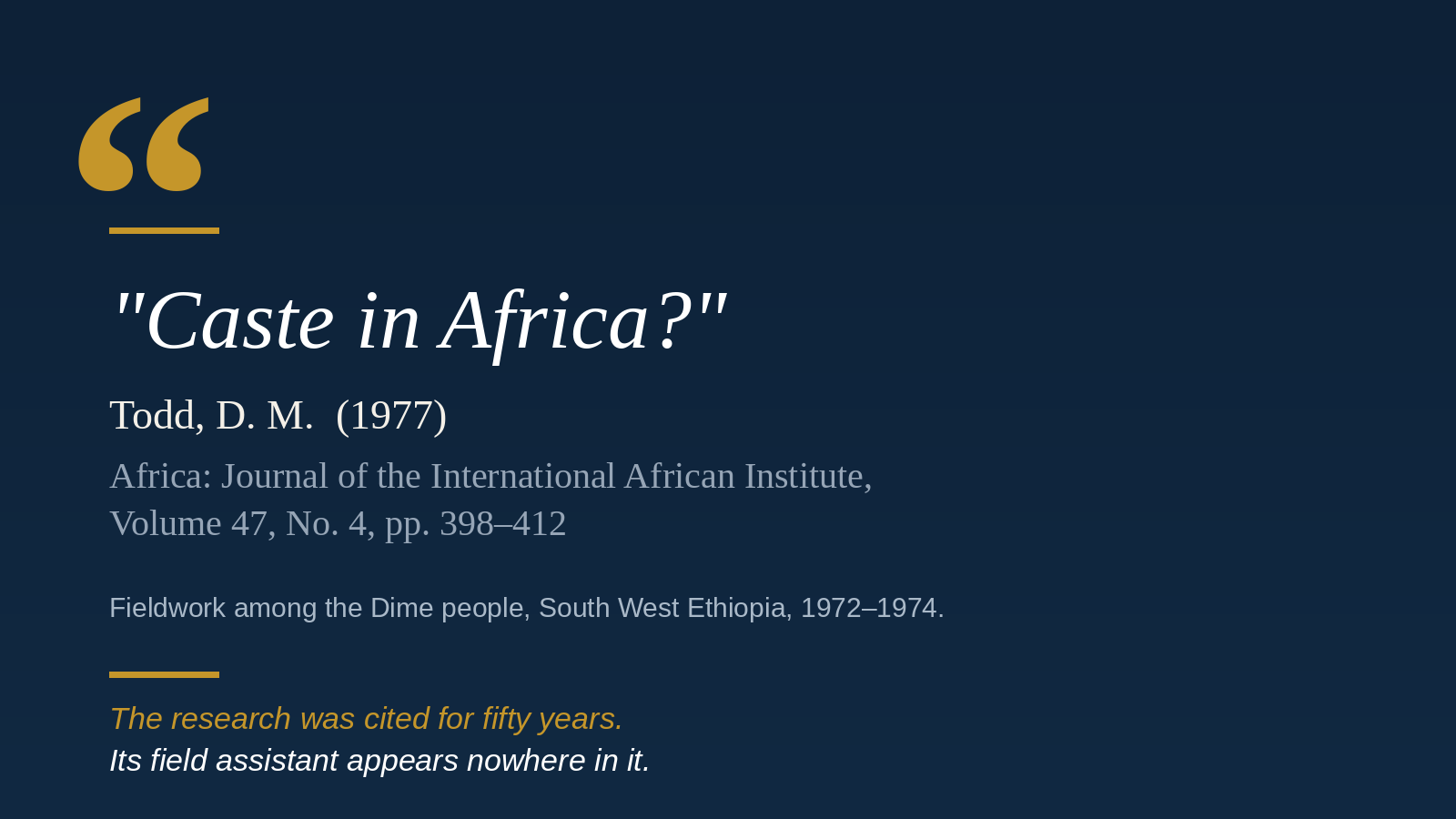
In the early 1970s, a British anthropologist named Dr. David Michael Todd came to Dime, in the far southwest of Ethiopia, to study the Dime people. The research he produced there (on Dime society, its castes, its craftsmen) became foundational work, cited by scholars for the next fifty years.
He did not come alone. Working beside him for two years was a young man from the other side of the country: Tadesse Gemeda, from Nejo (Nedjo) in Wellega, grandson of a man named Oda. Tadesse spoke English, rare in that time and place, and he could drive. For two years he worked as the research team's field assistant.
Related Stories
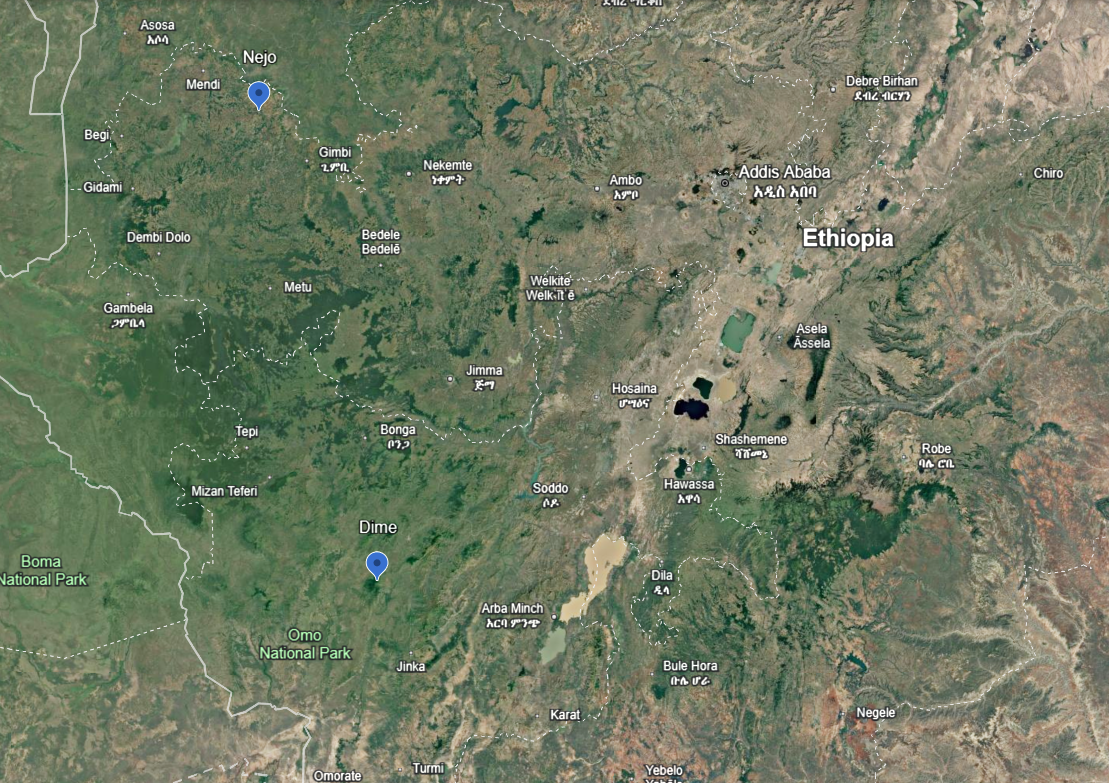
Nejo in Wellega, where Tadesse Gemeda was from, and Dime in the far South West, where he worked with Dr. Todd's research team until 1974, and where his son was born after he left, some 600 km apart.
In Dime, Tadesse and Fanaye Lakew Gezahagn were together, and she was soon expecting their first child.
Then came 1974. The revolution that ended Haile Selassie's reign was underway; the country was entering the turmoil of the transition to the Derg. The research team left Dime, and Tadesse left with them, promising Fanaye he would return when the situation improved.
"But the promise," his son writes, "turned into an unfulfilled promise."
Tarekegn was born after his father's departure. They have never met.
Fifty years of searching
Tarekegn grew up, married, raised four children and never stopped looking. "Even though I endured much suffering throughout my life to find out where he was and who his family was," he writes, "I haven't been able to do it thus far."
He did what a searcher with almost nothing to go on does. He tried social media. He held live conversations with anyone who might know something. And he went looking for his father in the one place those two years should have left a trace: the academic record.
He found Dr. Todd's PhD dissertation at the Institute of Ethiopian Studies at Addis Ababa University. He read it looking for his father's name. It was not there, not even in the acknowledgements. He contacted the University of Kent, where Dr. Todd had been based. Nothing.
"Staying together for two years truly creates wonderful memories and a friendship," Tarekegn writes. "But how come there isn't even a line of evidence about Tadesse?"
Todd's 1977 paper on the Dime became a landmark of Ethiopian anthropology.
It is a question about one man, and about something larger. In the rural Ethiopia of the 1970s, there were no cameras in most households, no documents, no habit of recording. A man could work at the centre of a famous research project and leave no trace in it. The research was preserved. The researcher was cited for more than fifty years. The assistant vanished from the record as completely as he vanished from Dime.
No photograph of Tadesse Gemeda is known to exist.
The mother who kept his name
What survived instead was carried by people. By Tadesse's close friend Masresha Ayele Turulo, the husband of Tarekegn's aunt, who passed to Tarekegn the facts he now holds like coordinates:
Everything the family knows
Wellega
Nejo
A grandfather named Oda
Spoke English
Could drive
Facts passed down by family: the family's best knowledge, held for more than fifty years.
And by his mother. Through everything including a stepfather who wished to give Tarekegn his own name, Fanaye "loved and kept my father's legacy," refusing to let her son's true parentage be rewritten.
A name, protected for more than fifty years, by memory alone.
The record that exists now
On 3 August 2026, Tadesse Gemeda's name was entered into the Missing From Ethiopia registry, a permanent, public, searchable record, in five languages: Amharic, Afaan Oromo, Tigrinya, Arabic, and English.
It is, as far as his family knows, the first document in more than fifty years to carry his name.
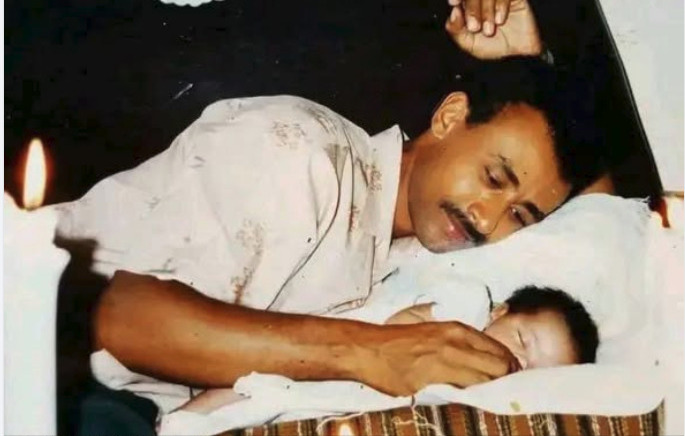
The photograph on the record is his son's offered in the hope that a father's face might be found in it. "I am now in my early 50s, married, and have four kids," Tarekegn writes. "Praise be to God! The hunt is still ongoing." He lives today in Hawassa, in Ethiopia's south.
Somewhere, there may be a family in Nejo that remembers a son who went south with foreign researchers and never came home. Somewhere there may be a photograph in a fieldwork archive, a name in a field diary, a member of Dr. Todd's circle who remembers the English-speaking assistant from Wellega who could drive.
If you are from Nejo, if you know the family of Oda or any relatives of Tadesse Gemeda — in Ethiopia or anywhere in the world — or if you remember the research team that worked in Dime between 1972 and 1974, please submit a tip. And if you simply want to help, share this story. After more than fifty years, a line of evidence about Tadesse finally exists. Help it be found.
This story is published with the consent of Tarekegn (Dawit) Tadesse Gemeda and is drawn from his own written account.